 |
|
2 Year
Full-Time MBA |
|
PGDM
PGDM E-Biz
PGDM Business Design
PGDM Retail Management
PGDM – Family Managed Business |
|
Three Year Part Time Masters
Degree Program |
|
The Part Time Masters Degree Programs are designed to
provide young and executives, a cutting edge over their
peers ....
Read More
Send Enquiry
|
Post Graduate Program
in Health Care Management |
|
A management graduate who studies only general
functional areas such as marketing, production.....
Read More
Send Enquiry |
|
DICM :
Diploma in Commodities Market |
|
Globalization and liberalization of Indian economy has
brought in its wake many sweeping changes in various
sectors of the economy ....
Read More
Send Enquiry |
|
One year Diploma Programs |
|
All the programs are recognized by Distance Education
Council (DEC), a body of the Central Govt. of India....
Read More
Send Enquiry |
DBM :
Diploma in
Business Management |
|
This is a General Management program which encompasses
the basics of management....
Read More
Send Enquiry |
DMkM :
Diploma in
Marketing Management |
|
This is a specialized Management program in marketing
with special focus on marketing as the core business
function....
Read More
Send Enquiry |
DMtM :
Diploma in
Materials Management |
|
This is a specialized Management program which emphasis
on the concept "Material is Money"....
Read More
Send Enquiry |
DHRM :
Diploma in Human
Resource Management |
|
This is a specialized management program with a clear
cut focus on the Human resource management as one of the
most....
Read More
Send Enquiry |
|
Six Month Diploma Programs |
|
All the programs are recognized by Distance Education
Council (DEC), a body of the Government of India....
Read More
Send Enquiry |
|
Diploma in
Banking |
|
This is a Six Month Diploma course offered in Distance
Learning mode....
Read More
Send Enquiry |
|
PGDBA - DLP : |
|
Welingkar Institute of Management is an autonomous
institute and all distance learning programs offered by
it are autonomous in nature...
Read More
Send Enquiry |
|
Contact Us |
WeSchool
Welingkar Institute of Management Development & Research
L.Napoo Road, Matunga Central Railway station,
Matunga - 400 019
Ph: 91-22-24178300
E-Mail Us |
|
Bengaluru Campus |
102/103, Electronic City
Phase 1, Next to
Telephone Exchange
Hosur Road,
Bengaluru - 560100
Ph: 91-80-42678300 /
91-80-28521066 |
|
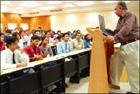
Picture Gallery : Mumbai |
 |
|
Classrooms & Audio-Visual facilities |
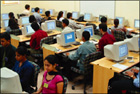 |
| IT
Infrastructure |
 |
|
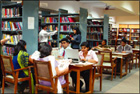
Library |
 |
|
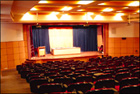
Amphitheatre |
 |
|
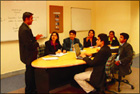
Auditorium |
 |
|
Brainstorm Room |
 |
|
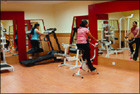
Yoga & Meditation Cell |
 |
|
Recreation Centre |
 |
|
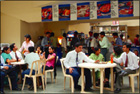
Cafeteria |
 |
|
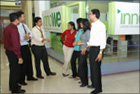
innovation Lab |
|
Picture Gallery : Bengaluru |
 |
|
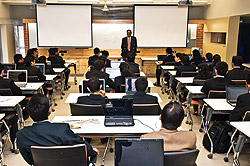
Classrooms |
 |
|
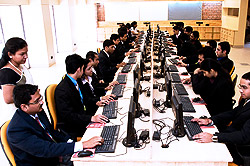
IT Centre |
 |
|
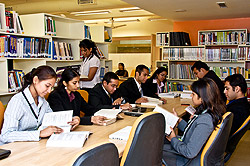
Library |
 |
|
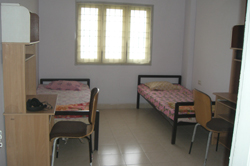
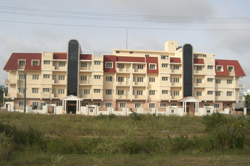
Hostel Rooms |
 |
|
Hostel |
|
-------------------- |
Core Faculty Mumbai
Core Faculty Bangalore
Visiting Faculty
International Faculty |
|
|
 |
|
|
|
|
|
PGDM - 2 Year Full-Time, Recognized by
AICTE |
 |
 |
|
Welingkar commitment to producing thought leaders and
masters of innovation reveals itself in the variety of
contemporary and comprehensive business management
courses it offers. To meet the challenges of tomorrow,
we need to usher in the new and keep developing the old.
The Postgraduate Diploma in Business Management, the
flagship program has the flexibility to incorporate
these new trends while still providing the fundamentals
of management education. The program nurtures
world-class managers with analytical tools, business
philosophies and exposure to real-life unstructured
situations.
The trimester system followed in the program facilitates
students with the flexibility required to engage in
several live projects and activities that mould their
personality. Subjects like Strategic Management,
International Business, Business Ethics & Corporate
Governance, Leadership Practices, Team Building
Exercises, Cross Functional Roles, Advanced Tax
Management, Operating System, Business Systems Analysis,
Entrepreneurship Management, Functional Specialization
Projects, Leadership Practices, Emotional Intelligence
and many more have been incorporated into the curriculum
to expose students to the inner workings of the
corporate world, and to sharpen their thinking skills
for innovation of ideas and solutions in the light of
various limitations.
Verticals Offered:
The
specializations offered are Marketing, Human Resources,
Finance, Operations, Retail and Systems. Students
discover their true potential after practicing rigor and
focused hard work having selected the specialization of
their choice.
The PGDM thus provides the right tools to meet
challenges and constantly aims at creating and nurturing
future world leaders.
Current intake - 180 in Mumbai only
Fees: Rs. 2,50,000 Per Annum.
Tests Accepted: CAT, XAT, MH-CET, ATMA
Eligibility: Minimum 50% in graduation, final year
students awaiting results may also apply.
Contact Personnel
Tel: 022-24178300. Ext: 739 / 740 / 741
 |
|
|
|
PGDM E-Biz - 2 Year Full-Time, Recognized by AICTE |
|
|
The program comprehensively
covers various core knowledge subjects in general
management areas such as Marketing, Finance, Human
Resources and Operations. This provides students with
the fundamental foundation to manage any business. The
business management subjects are blended with a range of
special subjects that provide an understanding of
underlying technologies and concepts that make
e-Business possible. The emphasis is on teaching how to
utilize technology as a means to an end and not an end
in itself.
Total no of Seats: 60 (Mumbai and Bengaluru Campus only)
Fees: Rs. 2, 50,000 p.a.
Tests Accepted: CAT, XAT, MH-CET, ATMA
Eligibility: Minimum 50% in graduation, final year
students awaiting results may also apply.
Contact Personnel
Tel: 022-24178300. Ext: 739 / 740 / 741
|
|
|
PGDM Business Design - 2 Year Full-Time, Recognized by
AICTE |
|
|
Why Design Thinking
Corporations today are not the same as they were
yesterday because the way market is driven is
unforeseen. There are new ways of doing business and
ever evolving newer rules of the game.
We are in the middle of a massive change. Today it's not
about the world of design. It's about the design of the
world. Hence being acquainted with principles of
Management is insufficient. Rather, it is essential to
question the conventional framework and to 'Design' your
own rules of business.
The market-driven era is finally giving way to the
people centered era. Businesses today are built around
humans, not merely as customers of commodities. These
days the world is based on creative economy, where
'Design' is the key differentiator for a company's
success.
‘Design Thinking’ with Welingkar's PGPBD (The Post
Graduate Program in Business Design)
Welingkar's Post Graduate Program in Business Design
aims at fostering future leaders with a unique blend of
management competencies, design thinking and innovation.
What PGPBD offers
At Welingkar we understand that in order to weave Design
Thinking into the main stream management, a
multidisciplinary approach to management education is
imperative.
The PGPBD is therefore:
-
The only program of its kind which blends Business and
Design
-
Nurtures Design Thinkers who can lead innovation in
industry and apply design thinking to products,
processes, customer experiences and even business models
and strategy
-
Nurtures a set of Design Managers for the growing
Design Industry - pure design houses, media and
advertising industry, content creation houses, IT
industry as also corporate who need managers to
interface with designers
-
Develops an entrepreneurial / intrapreneurial mindset
New pedagogy
-
Teaching subjects in an integrative manner
-
Learning by doing - prototyping, hands-on and
experiential learning as designers tend to learn through
activities
-
Use of multiple media to present and to learn
-
Critical Thinking - which questions every aspect
-
Holistic Thinking - Human centered approach, looking
at all aspects before arriving at solutions. The best
way to have a holistic view of business is to have an
integrated learning approach that can be effectively
imparted using project based learning. The biggest
advantage of project based learning is the development
of the skill of defining the problem first and then
thinking of breakthrough solutions for the same. This
paves the way for innovation - whether in products,
processes, services or environment as a whole.
Total no of Seats: 60 (Mumbai Campus only)
Fees: Rs. 2,50,000 Per Annum
Tests Accepted: CAT, XAT, MH-CET, ATMA
Eligibility: Minimum 50% in graduation, final year
students awaiting results may also apply.
Contact Personnel
Tel: 022-24178300. Ext: 739 / 740 / 741
|
|
|
PGDM-
Retail Management Executive Program with Pantaloon,
Recognized by AICTE |
|
|
|
The executive Post Graduate Diploma in Management –
Retail Management combines disciplines of Business
Management and super-specialize in Retail management. It
provides a unique blend of academic prowess of Welingkar
and practical rigor of the industry through PRIL. The
learning process involves advanced training in theory
and applications in the retailing business.
This course aims to provide students the skills,
creativity and knowledge to understand retailing as a
business management discipline. The program comprises of
15 months classroom and 9 months of project work
distributed across the program.
The academic content is designed to provide knowledge of
business management in general and retail management in
particular. The program is supported by practical
courses assignments and case studies. Teaching methods
include lectures, workshops, field trips and
assignments. On successful completion of the program,
besides a career in the retail sector, this program also
provide a solid foundation for employment in any
industry which interfaces with retailers.
Present intake - 30 seats in Mumbai Campus only
Fees: Rs. 2,00,000 Per Annum
Tests Accepted: CAT, XAT, MH-CET, ATMA
Eligibility: Minimum 50% in graduation, final year
students awaiting results may also apply.
Contact Personnel
Tel: 022-24178300. Ext: 739 / 740 / 741
|
|
|
PGDM - Family Managed Business (PGDM FMB) |
|
|
|
The
Indian and world economy are dominated by family owned
businesses, which generate most of the economic output
and wealth of a nation. In some regions of the world
family-owned companies virtually control the economy.
While family-owned companies are often strong
competitors, they have vulnerabilities that need to be
managed. A vast majority of family controlled businesses
experience difficulties like moving from one-person
general management to an institutionalized competence
that results into competitive fitness across
generations.
Keeping in view different issues which confront family
managed business, Welingkar has designed PGDM Family
Managed Business (PGDMFMB) program, which explores and
analyzes best management practices in family-owned
businesses, governance practices and family continuity
challenges, including issues relating to first
generation entrepreneurs.
About the Program
The PGDM FMB program trains young members of business
families who are eager to acquire management skills
while contributing to their business. It explores
businesses, personal and family issues confronting such
businesses and the managerial, strategic and behavioral
complexities in such firms.
Through the combination of classroom sessions which
includes different forms of experiential learning and
international exposure, the participants will learn how
to leverage on their strengths and manage the challenges
of family managed businesses.
-Participants whose family (or spouse's family) owns a business, whether
or not the participant intends to work in the business
or will be a shareholder of it.
-Participants who may work with these businesses as a non-family manager,
consultant, investment banker, private banker or in
other roles.
-Participants who are first generation entrepreneurs/ members of the
family.
Program Duration
-20 months class room sessions
-2 months internship
Classes will be held for 12 days in a month for 20
months, thereby leaving students with time to attend to
their business for the remaining three weeks of the
month.
Course Fee
Rs.3, 75,000/- (2 years)
Batch size
The batch size is 30
Contact Details:
Prin. L. N. Welingkar Institute of Management
Development & Research, Lakhamsi Napoo Road,
Matunga [East], Mumbai 400 019.
Tel: +91-22-2417 8300 Extn: 458
|
|
|
Three Year Part Time Masters Degree Program
|
|
|
|
The Part Time Masters Degree Programs are designed to
provide young and executives, a cutting edge over their
peers.
By pursuing advanced studies in their chosen area of
specialization, they not only improve upon their current
practices but also acquire the management skills needed
to compete in today's rapidly growing and highly
challenging economy.
All courses under this Program are affiliated to the
University Of Mumbai
and have been approved by AICTE.
-Masters in Marketing Management (MMM)
-Masters in Human Resource Development Management (MHRDM)
-Masters in Financial Management (MFM)
-Masters in Information Management (MIM)
Eligibility
Graduates (10+2+3) from a recognized university having 2
years of work experience after graduation in an
executive or supervisory category, are eligible to apply
to the Program.
Lecture Time: Monday to Saturday, 6.30pm to 9.30pm (On
Sundays if required)
Contact Personnel
Prof. Sydney Prabhu - Dean Part-time Masters Programs
Mr. Subramaniam / Ms. Ratnamala. Tel: 022-24178300. Ext:
148/142
Fax: 022-24105518.
|
|
|
Post Graduate Program in Healthcare
Management |
|
|
|
A
management graduate who studies only general functional
areas such as marketing, production, finance will need
to develop an appreciation of the healthcare domain to
contribute meaningfully to this sector. Similarly a
health science professional lacks knowledge and
application of management principles. The Healthcare
program bridges the capabilities required to use and
apply management principles in people management,
finance, operation, communication and other areas to the
Healthcare Sector.
A specialized program in healthcare ensures that
participants are
|
|
able to understand management principles &
practices, |
|
|
functional elements of management, business
environment & its influence on organizations in
the Indian context |
|
|
prepare & implement business plans |
|
|
develop human relationship skills |
|
|
to provide theoretical and practical knowledge
of Healthcare services, Hospital Organization -
Operation & planning |
|
|
address healthcare issues specific to the Indian
context with exposure to real life
cases/technical know-how in the healthcare
services sector & to give the student a starting
edge in the healthcare industry. |
Career Opportunities that can open up for a person
trained in Healthcare Management
It
is not only hospitals which require management
professionals. A whole lot of specialized exist in the
following sectors:
|
|
lifestyle clinics |
|
|
emergency medicine units |
|
|
pharmaceutical firms |
|
|
hospital information systems |
|
|
e-health ventures |
|
|
Credit rating firms |
|
|
NGOs and Health Insurance now require trained
manpower |
|
|
Specialized in hospital administration. |
The
industry too is upbeat with the availability of
efficient manpower to handle managerial tasks in
healthcare services. Grading of healthcare institutions
is another area with lot of excitement and challenges
for healthcare managers and they can learn newer
concepts here. Rating agencies like CRISIL and ICRA have
absorbed many freshers in the recent past as healthcare
consultants. Doctors and administrators/managers form a
crucial link in Third Party Administrative (TPA)
operations. They can be assigned tasks like gate keeping
functions, claim audit - technical evaluations, claim
investigations, etc. To bridge the huge demand-supply
gap in the professional management segment, experts feel
that more teaching facilities should be set up.
Eligibility
MBBS, BDS, B.Pharm., B.H.M.S, M.Pharm., BEMS, BAMS,
B.Sc. (graduates with experience of 1-2 years or
freshers), BMS (graduates with 1-2 years of experience)
Fees
Rs.1, 25,000
Duration
11 months
Lecture Timings
Lecture will be conducted on Saturdays and Sundays,
between 9am - 4pm (depending on course requirements)
Contact Details:
Tel.: 022-24178300; Extn.: 573
Email:
hcm@welingkar.org
|
|
|
Diploma in Commodities Market (DICM) |
|
|
|
Globalization and liberalization of Indian economy has
brought in its wake many sweeping changes in various
sectors of the economy. Commodity markets are not an
exception to this. Winds of change have totally
transformed the way the commodity markets used to
function. Futures trading, which was kept under wraps
under stringent regulatory framework - almost for three
decades (except for intermittent trading that was
allowed – that too selectively in some commodities), was
unveiled three years back in the form of demutualized
“state of the art” commodity exchanges. The result of
this is there for anybody to see. The futures trading
has sprung back with great alacrity witnessing all round
growth – almost beyond the expectations of most experts
and players in the field of commodity markets.
Investment in Commodity futures is offering an
attractive alternative to investment in stock markets
and real estate. Commodity markets in general and trade
in commodity futures in particular has therefore
witnessed a spectacular growth in the last two years in
the country. It is said that “figures speak for
themselves”. This is true of the growth in futures trade
in commodities too. According to the figures available
from Forward Markets Commission (FMC), the turnover of
all commodity exchanges has increased from Rs. 66,530
crore in the year 2002-2003 to Rs. 21,34,470 crore in
the year 2005-2006 and over 30,00,000 crore in the year
2006-07i.e. more than forty times in four years. With
the global financial turmoil, commodity markets in India
have also been adversely affected during the year
2008-09. However, we anticipate that this would be a
passing phase.
As a result of this outstanding growth, a number of job
opportunities have been created. “This is also reflected
in the increasing number of companies that are
approaching us for recruiting our students. Most of the
brokerage houses, which were dealing with exclusively
stock market have either started commodity desks or are
in the process of establishing them soon. They require
trained manpower apart from the commodity exchanges, who
have also recruited our students” according to Prof.
Anil Mendhi who heads the Department of Commodities
Market at Welingkar and is a known authority on the
subject.
Jointly with MCX, Welingkar Institute has successfully
completed ten batches of its Diploma in Commodities
Market (DICM) and starting the eleventh batch in Mumbai
from November 2008. The Institute has also conducted
this course in Bangalore and Pune. In all over 1500
students have completed this course from various
centers. This number is far less than the estimated
requirement of 40,000 professionals in the country in
the coming year itself.
The response to the course has been overwhelming in
Mumbai. The participants of the course have a very
diverse profile. They include working executives from
Banks and brokerage houses, students who are doing or
planning to do their post graduation (mainly in
management) besides a few retired professionals and
housewives, who would like to explore new alternatives
of investing their savings for better returns. Many
students who are aspiring for admissions to leading
Business schools prefer to complete this course as an
added advantage first for admissions and then for
placement with investment bankers or large brokerage
houses.
Sessions are conducted over the weekend (i.e. on
Saturday and Sunday). Intake of each batch is restricted
to a maximum of 60.
We start a fresh batch in Pune, Bangalore or Delhi only
after a minimum of 20 students register for the course
at these centers. Many business schools as also large
corporate entities have shown interest in conducting
seminars and DICM courses at their premises.
Some of the reasons why more & more professionals &
students are attracted to this course are
-
Commodity derivatives are fast emerging as one of the
alternatives to invest money as a part of one’s
portfolio of investment to earn money through
speculation.
-
Commodity markets give better returns than stock
markets since the margin money required is less.
-
World-over, commodity markets’ turnover is at least
five times that of the stock market.
-
DICM becomes an added qualification for a student if
he / she is planning to do post graduation.
Broadly
the course contents are divided in three sections as
follows:
Understanding of Commodity Markets:
Introduction to Commodity Markets, Stock & Commodity
Markets - A Comparison,
Introduction to Indian and Global Commodity Exchanges,
Forex & Commodity
Markets, FDI & FII, Regulatory Issues.
Derivative Products, Trading, Market Mechanism, Risk
Management (with exercise and examples):
Introduction to Derivatives, Commodity Futures and
Options, Trading Strategies using Commodity Futures &
Options, Trading Mechanism at Commodity Exchanges, Risk
Management and Surveillance, Clearing Settlement &
Delivery, Investment Opportunities in Commodity Markets,
Importance of Risk Management in Commodity Trading,
Setting up of Commodity Desk, Banks, Warehousing &
Commodity Trading, Accounting & Taxation, Technical
Analysis.
Online Simulated Trading & Fundamental Analysis
Understanding commodities (Fundamental Analysis), Case
Studies and Simulated Trading
Salient features of the course:
This is still the only course of its type being
conducted by a management institute in India along with
the largest commodity exchange in the country.
It has international content since we brief the students
about the practices followed by overseas commodity
exchanges. Usually we take one additional session on
currency derivatives so that the students understand how
to hedge risks against fluctuations in currency rate in
the context of trading on international commodity
exchanges. This would be particularly useful in todays
context when the Government has permitted currency
derivatives to be traded by three exchanges MCX Stock
Exchange, NSE and BSE.
Apart from the experienced faculty of Welingkar and MCX,
we invite industry professionals to take specialized
sessions. For example, the session on regulatory issues
is taken by a person at Director’s level in Forward
Markets Commission, which is the regulatory authority
for commodity markets in India. A session on practical
usage of technical analysis is taken by a practicing
technical analyst from the industry.
On - hands training is imparted to the participants of
this course through simulation game. This course is
available in the form of a Distance Learning Program (DLP)
also. Thus executives / students from various cities
other than Mumbai can enroll for the DLP and learn about
commodity markets at their leisure sitting in the
comforts of their own offices or homes!!
Eligibility: Graduation in English Medium
Duration: 100 hours (3 months)
Fees: Rs. 25,000 (Rs. Twenty Five Thousand only) for
classroom mode and Rs. 15000 (Rs. Fifteen Thousand) for
Distance learning mode
Admissions: Currently on for Mumbai Batch.
Please watch for a date for free seminar on “Career
Opportunities in the field of commodity markets” at the
venues in Mumbai, Pune and Bangalore. For further
details of the course, one can log on to the websites of
Welingkar (
www.welingkar.org ) or MCX (
www.mcxindia.com )
or directly contact the Institute at:
Contact Details:
Prof. A. G. Mendhi, Head (Commodity Markets)
Prin. L. N. Welingkar Institute of Management
Development & Research,
Lakhamsi Napoo Road,
Matunga [East],
Mumbai 400 019.
India
Tel: +91-22-2417 8300 Extensions: 450 or 460 or 203
|
|
|
One Year Diploma Programs |
|
|
|
Program Details
All the programs are recognized by Distance Education
Council (DEC), a body of the Central Govt. of India.
The program names and their fees are given below. Click
on the program name to know details about the program.
All programs commence twice in a year (July & January).
The medium of instruction is English. |
|
|
|
Program Name |
Type I |
Type II |
Type III |
|
Diploma In Business Management (DBM) |
Rs. 20,000/- |
Rs. 22,500/- |
Rs. 10,700/- |
|
Diploma In Marketing Management(DMkM) |
Rs. 20,000/- |
Rs. 22,500/- |
Rs. 10,700/- |
|
Diploma In Materials Management(DMtM) |
Not available |
Rs. 22,500/- |
Rs. 10,700/- |
|
Diploma In Human Resource Management(DHRM) |
Rs. 20,000/- |
Rs. 22,500/- |
Rs. 10,700/- |
|
Diploma In Financial Management(DFM) |
Rs. 20,000/- |
Rs. 22,500/- |
Rs. 10,700/- |
|
Diploma in Industrial Management (DIM) |
Not available |
Not available |
|
|
|
Students
can complete any of the above programs simultaneously
with any other program of any University in the country.
The Program fees include cost of tuition fees, study
material and examination fee. Study material is provided
by the Institute.
For International Students the fees would be Rs.
21,400/- for all the programs. |
|
Eligibility |
|
-Graduate in any faculty
(Arts, Commerce, Science, Engineering, Pharmacy,
Medicine, Architecture, Computer Science and Business
Administration). Students who have appeared for Final
year exams can also apply. Admission will be granted
only on submission of the attested Xerox copies of their
degree certificates/final year mark sheets and subject
to the student successfully completing the Degree prior
to the commencement of the program.
-Diploma holders in
Engineering, Technology, Chemical, Pharmacy, Textile,
Printing Technology, Computer Science, Business
Administration and other Vocational Diploma programs.
Passed Class XII and
having two year full-time work experience post class XII
may apply. Candidates will need to produce work
experience certificate at the time of admission. |
|
Study Options |
|
-Students can opt for the
program through one of the following options:- |
|
Sr. No. |
Options |
Options |
|
1 |
Type I |
Monday to Friday, 6.30 pm to 8.30 pm at
Podar / Ruia College, Mumbai. |
|
2 |
Type II |
Sundays, between 9.00 am to 6.00 pm at Podar
/ Ruia College, Mumbai. |
|
3 |
Type III |
Prescheduled Personal Contact Programs
(PCPs) announced from time to time are held
in Matunga, Borivali, Dombivli or Pune |
|
|
|
|
|
Diploma in Business Management (DBM) |
|
|
|
This is a General
Management program which encompasses the basics of
management. It gives the candidate an insight of
business functions keeping in mind, how optimum
utilization of resources will enable the business
function to maximize the wealth. It is a program which
should be done by candidate who wants to understand the
management fundamentals and purse their career in
general management.
Highlights of
the Program
·
The
program focuses on developing general management skill
as required in the industry.
·
The
program has been designed taking into consideration the
needs of both working professional
as well as fresher.
·
Faculty members include experts from the industry and
academia. |
|
|
|
|
Diploma in Marketing Management (DMkM) |
|
|
|
This is a specialized Management program in marketing
with special focus on marketing as the core business
function. It encompasses the basic principles of
marketing management. It enables the candidate to
capture the dynamic realities of the market place while
emphasizing on consumer behaviour, market research and
other elements of marketing and sales management. It is
a program which should be done by candidates who wants
to understand the marketing management fundamentals and
purse their career in marketing and sales management.
Highlights of
the Program
·
The
program focuses on developing marketing management skill
as required in the
today's competitive industry.
·
The
program has been designed taking into consideration the
needs of both working professional
as well as fresher.
·
Experienced faculty members include experts from the
industry and academia. |
|
|
|
|
Diploma in Materials Management (DMtM) |
|
|
|
This is a
specialized Management program which emphasis on the
concept "Material is Money". It encompasses the
importance of material management and Industry is giving
special focus on vendor management and procurement. It
enables the candidate understand how cost of material
can make the industry competitive. It also helps the
participants to understand that this function also can
increase the profitability of a business organization.
It is a program which should be done by candidates who
wants to understand the importance of materials
department in an organization and develop themselves as
able managers in this ever growing business function.
Highlights of the Program
• The program focuses on developing materials management
skill as required in the today's competitive industry.
• The program has been designed taking into
consideration the needs of both working professional as
well
as fresher.
• Experienced faculty members include experts from the
manufacturing and retail industry and academia.
|
|
|
|
|
Diploma in Human Resource Management (DHRM) |
|
|
|
This is a specialized management program with a clear
cut focus on the Human resource management as one of the
most important functions in an organization. Human
resource management is a process of bringing people
together so that the goals of the organization can be
achieved. This program helps the candidate to understand
the role of the HR Manager in this ever growing
competitive industry. It is a program which should be
done by candidate who wants to pursue their career in
Recruitment, Training and Development and Organization
Design management.
Highlights of
the Program
·
The
program focuses on developing Human Resource management
skill as required in the industry.
·
The
program has been designed taking into consideration the
needs of both working professional
as well as fresher.
·
Eminent and experienced faculty members include experts
from the industry and academia. |
|
|
|
|
Six Month Diploma Programs |
|
|
Program Details
All the programs are recognized by Distance Education
Council (DEC), a body of the Government of India.
The program names and their fees are given below. Click
on the program name to know details of that program. All
programs commence twice in a year (July & January). The
medium of instruction is English. |
|
Program Name |
Type I |
Type II |
Type III |
|
Diploma In Advertising & Public Relations (DAPR) |
Rs. 10,000/- |
Rs. 12,500/- |
Rs. 7,500/- |
|
Diploma In Tax Management (DTM) |
Rs. 10,000/- |
Rs. 12,500/- |
Rs. 7,500/- |
|
Diploma In Export Import Management (DEIM) |
Rs. 10,000/- |
Rs. 12,500/- |
Rs. 7,500/- |
|
Diploma In Entrepreneurship Management (DEM) |
Not available |
Not available |
Rs. 7,500/- |
|
Students can complete any
of the above programs simultaneously with any other
programs of any University in the country.
The Program fees include cost of tuition fees, study
material and examination fee. Study material is provided
by the Institute.
For International Students the fees would be Rs.
15,000/- for all the programs. |
|
Eligibility |
|
Graduate
in any faculty (Arts, Commerce, Science, Engineering,
Pharmacy, Medicine, Architecture, Computer Science and
Business Administration.
-Diploma holders in Engineering, Technology, Chemical,
Pharmacy, Textile, Printing Technology, Computer
Science, Business Administration and other Vocational
Diploma programs.
-Passed Class XII in any faculty. |
|
Study Options |
|
-Students can opt for the program through one of the
following options:- |
|
Sr. No. |
Options |
Options |
|
1 |
Type I |
Monday to Friday, 6.30 pm to 8.30 pm at
Podar / Ruia College, Mumbai. |
|
2 |
Type II |
All Sundays, between 9.00 am to 6.00 pm at
Podar / Ruia College, Mumbai. |
|
3 |
Type III |
Prescheduled Personal Contact Programs
(PCPs) announced from time to time in
Matunga. |
|
|
Contact Details:
Tel : +91-022-24174816 / 24174817 / 2414 1443 / 2413
0677
|
|
|
Diploma in
Banking |
|
|
Program Details
This is a Six Month Diploma course offered in Distance
Learning mode. The six month program is divided into two
trimesters. Applicants can complete the program in
minimum of six months and maximum of one year. If a
student is unable to complete the course within 1 year,
he has to pay re-registration fees of Rs. 2400/-. |
|
Eligibility |
- Graduates from any
recognized university.
- Final year degree
students. However, their admission will be confirmed
only on submission of the
attested photocopies of their degree certificates / final year
mark sheets.
- Three year diploma
holders from recognized Institutes.
|
|
Salient features of Diploma in Banking |
- Study material
developed by senior banking professionals.
- Study material
developed in consultation with leading banks to
offer knowledge that is required in banking sector.
- Flexible on line
exam process from various centers.
- Lecture CDs
- Web based
E-Learning Toolkit
- Placement support
link
- Newswire Services
- A two day free
experiential learning workshop at the Matunga campus
|
|
Course Material |
|
Specially Designed course
material prepared by senior banking professionals will
be couriered to the applicants along with audio-video
learning CD's for every subject within a maximum period
of 10 days from the date of registration. |
|
Contact details: |
Tel : +91-022-65272976 /
65272978
Mobile : 09220686681 |
|
|
|
|
Post - Graduate Diploma in Business
Administration (PGDBA - DLP) |
|
|
Program Details
Welingkar Institute of Management is an autonomous
institute and all distance learning programs offered by
it are autonomous in nature, but it is one of the few
institutions whose distance learning programs have been
accredited by Distance Education Council (DEC), a body
of the Central Govt. of India.
Distance Education Council (DEC) has been set up by the
Govt. of India under the IGNOU Act for assessment and
accreditation of distance education institutes in India.
An approved institute and its programs are stringently
appraised by DEC with regard to its content, quality of
education and its delivery systems. Hence, DEC approval
ensures students about the quality of education and
assures them about the standard of qualification which
they earn from the Institute's distance learning
programs. |
|
Duration |
|
This is 2 years, PG Diploma
program offered in the distance learning mode. The
curriculum is at par with the Distance Learning MBA
offered by leading Universities. The two year program is
divided into 4 semesters. |
|
Salient features of the program |
|
The first two semesters are generic, common to all and
cover general topics of management. The last two
semesters contain specialization related subjects. |
|
Eligibility |
- Graduates from any
recognized university.
- Diploma holders
from any recognized polytechnic with 3 years of
supervisory work experience post diploma.
- Final year degree
student. However, their admission will be confirmed
only on submission of the attested Xerox copies of
their degree certificates/final year mark sheets
within 60 days of admission.
- If a student has
completed his graduation from an international
university, then the University should be approved
by AIU/UGC/IGNOU or by any other international
associations like EQUIS, AACSB OR AMBA.
|
|
Contact details: |
Tel : +91-022-65272976 /
65272978
Mobile : 09220686681
|
|
|
|

